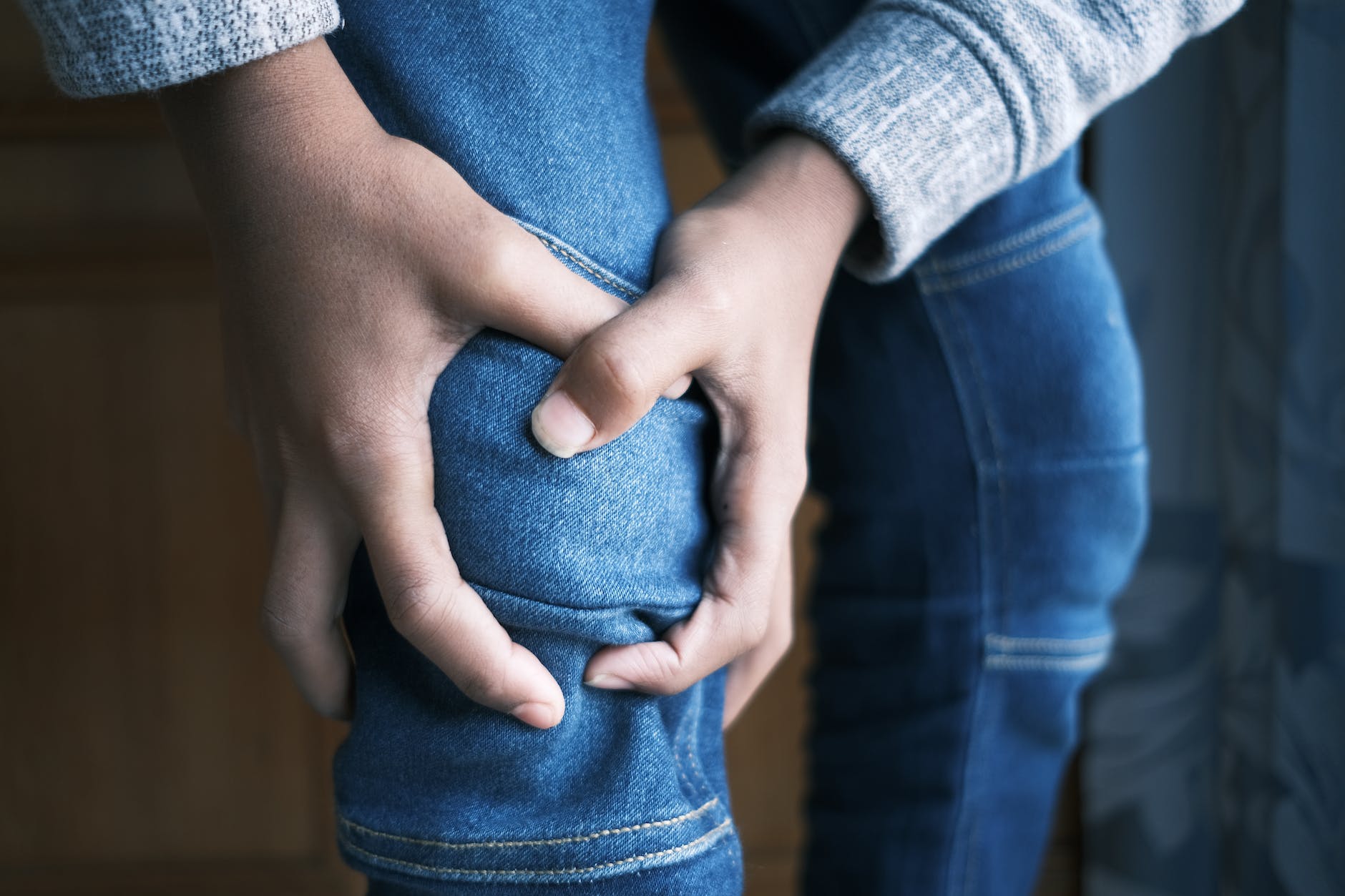
Knee pain is a common problem affecting people of all ages, impacting the quality of life and limiting activities of daily living (Cross et al., 2014)[1]. The knee joint’s complexity makes it vulnerable to various injuries and conditions. Understanding the causes and available treatment options for knee pain can help manage the condition effectively and prevent further complications.
Anatomy of the Knee
The knee is one of the largest and most complex joints in the human body. It consists of the lower end of the femur, the upper end of the tibia, the patella, and various ligaments, tendons, and cartilage structures (Standring, 2016)[2]. In addition, the knee contains two important shock-absorbing pieces of cartilage called menisci, which sit between the femur and the tibia.
Causes of Knee Pain
Knee pain can result from acute injuries, chronic conditions, or certain diseases.
- Injuries: Acute injuries such as ligament tears (anterior cruciate ligament or ACL tear), meniscal tears, fractures, and tendon tears can cause significant knee pain (Roos, 2012)[3].
- Degenerative conditions: Chronic wear-and-tear conditions like osteoarthritis can cause knee pain, stiffness, and swelling. Osteoarthritis results from cartilage degeneration, leading to bone rubbing against bone (Neogi, 2013)[4].
- Overuse injuries: Overuse or repetitive strain can cause several knee conditions, including patellar tendinitis, bursitis, and iliotibial band syndrome (Brukner & Khan, 2019)[5].
- Diseases: Certain diseases, like rheumatoid arthritis and gout, can also cause knee pain (Scott et al., 2010)[6].
Diagnosis of Knee Pain
Diagnosis begins with a detailed history and physical examination. Physicians assess the knee’s appearance, alignment, range of motion, and stability. Palpation helps identify areas of tenderness (Jackson & Furman, 2015)[7].
Imaging studies like X-rays can reveal fractures, joint space narrowing (indicative of arthritis), or bone spurs. MRI scans are particularly helpful for soft tissue injuries, such as ligament and meniscal tears (Palmer & Khan, 2013)[8].
Treatment of Knee Pain
Treatment depends on the underlying cause and severity of the pain. Common treatment strategies include:
- Physical Therapy: Physical therapy exercises can help strengthen the muscles around the knee and improve stability (Skou & Roos, 2017)[9].
- Medication: Over-the-counter pain relievers and nonsteroidal anti-inflammatory drugs (NSAIDs) can alleviate pain and reduce inflammation (Machado et al., 2015)[10]. In severe cases, physicians might prescribe stronger pain relievers.
- Injections: Corticosteroid or hyaluronic acid injections can provide temporary relief from knee pain (Bannuru et al., 2019)[11].
- Surgery: If conservative measures fail, surgical interventions such as arthroscopy, partial knee replacement, or total knee replacement may be necessary (Skou et al., 2015)[12].
Prevention and Self-care
Prevention strategies include maintaining a healthy weight, regular exercise, proper footwear, and protective gear during sports activities. Warm-up before exercise and cool-down afterward can prevent overuse injuries.
For self-care, the RICE method—Rest, Ice, Compression, and Elevation—can help alleviate acute knee pain (MacAuley, 2001)[13]. Over-the-counter knee braces or compression bandages can provide additional support and stability.
Conclusion
Knee pain is a common condition with various underlying causes. Effective diagnosis and treatment can lead to a significant reduction in pain and an improved quality of life. Although some causes of knee pain cannot be prevented, maintaining an active and healthy lifestyle can help protect the knee and keep it functioning optimally.
References
[1] Cross, M., Smith, E., Hoy, D., Nolte, S., Ackerman, I., Fransen, M., Bridgett, L., Williams, S., Guillemin, F., Hill, C. L., Laslett, L. L., Jones, G., Cicuttini, F., Osborne, R., Vos, T., Buchbinder, R., Woolf, A., & March, L. (2014). The global burden of hip and knee osteoarthritis: estimates from the global burden of disease 2010 study. Annals of the Rheumatic Diseases, 73(7), 1323-1330.
[2] Standring, S. (2016). Gray’s anatomy: the anatomical basis of clinical practice. Elsevier Health Sciences.
[3] Roos, E. M. (2012). Joint injury causes knee osteoarthritis in young adults. Current Opinion in Rheumatology, 24(2), 195-200.
[4] Neogi, T. (2013). The epidemiology and impact of pain in osteoarthritis. Osteoarthritis and Cartilage, 21(9), 1145-1153.
[5] Brukner, P., & Khan, K. (2019). Brukner & Khan’s clinical sports medicine. McGraw-Hill Education Australia.
[6] Scott, D. L., Wolfe, F., & Huizinga, T. W. (2010). Rheumatoid arthritis. The Lancet, 376(9746), 1094-1108.
[7] Jackson, J. L., & Furman, W. L. (2015). Clinical evaluation of the painful knee. Rheumatic Disease Clinics, 41(2), 239-254.
[8] Palmer, W. E., & Khan, K. M. (2013). Diagnostic imaging in sports medicine. In: Clinical Sports Medicine. McGraw-Hill Education Australia.
[9] Skou, S. T., & Roos, E. M. (2017). Good Life with osteoArthritis in Denmark (GLA:D): evidence-based education and supervised neuromuscular exercise delivered by certified physiotherapists nationwide. BMC Musculoskeletal Disorders, 18(1), 72.
[10] Machado, G. C., Maher, C. G., Ferreira, P. H., Pinheiro, M. B., Lin, C. W., Day, R. O., McLachlan, A. J., & Ferreira, M. L. (2015). Efficacy and safety of paracetamol for spinal pain and osteoarthritis: systematic review and meta-analysis of randomized placebo controlled trials. BMJ, 350, h1225.
[11] Bannuru, R. R., Osani, M. C., Vaysbrot, E. E., Arden, N. K., Bennell, K., Bierma-Zeinstra, S. M., Kraus, V. B., Lohmander, L. S., Abbott, J. H., Bhandari, M., Blanco, F. J., Espinosa, R., Haugen, I. K., Lin, J., Mandl, L. A., Moilanen, E., Nakamura, N., Snyder-Mackler, L., Trojian, T., Underwood, M., McAlindon, T. E. (2019). OARSI guidelines for the non-surgical management of knee, hip, and polyarticular osteoarthritis. Osteoarthritis and Cartilage, 27(11), 1578-1589.
[12] Skou, S. T., Roos, E. M., Laursen, M. B., Rathleff, M. S., Arendt-Nielsen, L., Simonsen, O., & Rasmussen, S. (2015). A randomized, controlled trial of total knee replacement. New England Journal of Medicine, 373(17), 1597-1606.
[13] MacAuley, D. (2001). Ice therapy: how good is the evidence? International Journal of Sports Medicine, 22(5), 379-384.
 TigerKinetics Health